
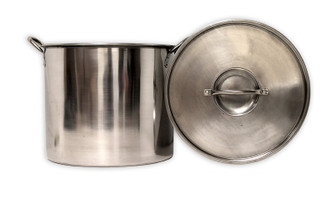
The Essential Brew Pot for Stove Top Homebrewing
Posted by Matteo Lahm on 26th Jan 2026
If you are brewing beer at home, this is the bare minimum you should have. A dedicated brew pot is not a luxury or an upgrade. It is foundational equipment. A 20 quart brew pot like this one is specifically sized for five gallon batches and is designed to handle the realities of brewing in ways that ordinary kitchen cookware simply cannot. If you want consistent results and fewer problems on brew day, this is where it starts.
At a glance, a brew pot may look like a stock pot you would use for cooking, but the differences matter once you start brewing regularly. Brewing demands longer boil times, higher sustained heat, and repeated contact with acidic wort and hop compounds. Many kitchen pots are made from thin metals, aluminum blends, or coated surfaces that work fine for food but introduce risks when used for beer. Over time, those materials can react with wort, hold onto odors, or contribute flavors that do not belong in your finished beer.
This pot is made from stainless steel, which is the gold standard for brewing. Stainless steel is non reactive, easy to sanitize, and does not absorb flavors or aromas. That means yesterday’s soup, pasta sauce, or cleaning chemicals will never interfere with your beer. Every batch you brew starts clean, neutral, and predictable, giving you real control over flavor and consistency.
Size matters, and a 20 quart capacity is ideal for five gallon brewing. It gives you enough headspace to manage a proper boil without constant fear of boil overs and allows for correct hop additions and healthy evaporation. Just as importantly, this pot is small enough to be used on a standard household stove top, including most gas and electric ranges. You can brew in your kitchen without special burners or complicated setups.
Using a dedicated brew pot also protects your beer from avoidable contamination. Brewing requires a clear separation from food equipment. Oils, fats, and food residues that are harmless in cooking can ruin a batch of beer by killing foam retention, muting hop aroma, or introducing off flavors. Even a pot that looks clean can hold onto microscopic residues once it has been heated repeatedly for food. This is so critical, you should not even store the pot in your kitchen.
If you brew beer at home, you should consider a dedicated stainless steel brew pot standard equipment. It removes unnecessary variables, improves consistency, and gives your process a solid foundation. This is not about upgrading for the sake of upgrading. It is about using the right tool for the job and giving your beer the clean, reliable starting point it deserves every single time.