Aging Beer: Why Some Beers Get Better With Time and Others Don't
Posted by Dale Hynes on 24th Oct 2026
We've all heard that certain wines improve with age, but what about beer? The comparison goes further than you might think. Some wines develop complexity over years, while others are best enjoyed young, when their fresh fruit and aromas are most expressive. Beer follows a similar pattern. An imperial stout might taste even better after another year in your basement, while an IPA loses the bright hop character that made it appealing.
The difference comes down to the beer, how you store it, and what you hope time will accomplish. Some beers need a few more weeks to become ready to drink. Others can reward months or years of careful storage. You can explore that potential by saving a few bottles while enjoying the rest, then use what you learn to plan your next batch.
Conditioning and Aging: What Are You Waiting For?
Brewers sometimes use conditioning, maturation, and aging interchangeably. For practical purposes, it helps to distinguish between allowing a young beer to become ready and saving a finished beer to see how it develops.
Initial conditioning gives a young beer time to settle and develop a more balanced flavor. For bottle-conditioned beer, this period also includes the fermentation of priming sugar that produces carbonation. However, being fully carbonated does not necessarily mean the beer tastes its best. It may benefit from additional time.
Extended aging, often called cellaring, means keeping a beer beyond that initial drinking window to explore further changes in flavor and aroma.
A Christmas ale that becomes more enjoyable after several additional weeks of conditioning may have reached the balance you wanted. Whether it will improve over another year is a different question.
What Happens When Beer Ages?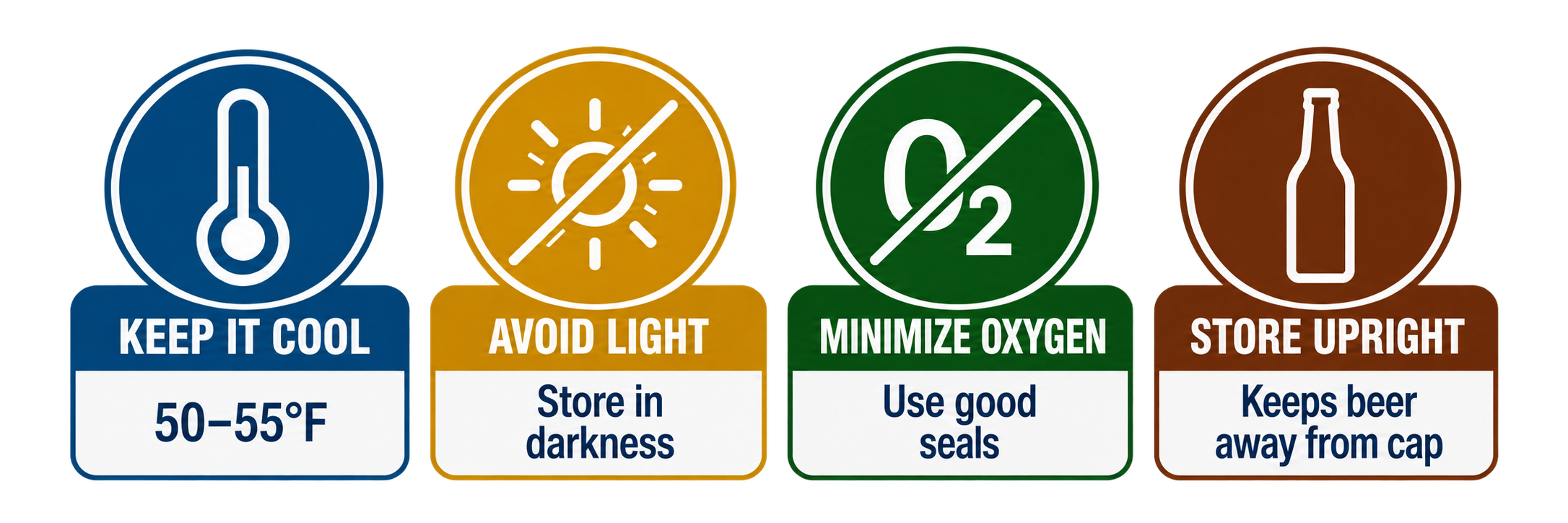
Beer continues changing long after fermentation finishes. Slow chemical reactions influence its flavor, aroma, appearance, and sometimes its body.
Hop aromas fade, bitterness can soften, and the balance between malt, hops, and fermentation character shifts. Certain strong beers may develop appealing notes of dried fruit, toffee, nuts, or sherry.
Oxidation contributes to some of these changes, but it can also produce stale, papery, or cardboard-like flavors. Whether a particular change is welcome depends on the beer and how far that change progresses. A subtle sherry note might complement a rich barleywine but seem out of place in a delicate pale lager.
Even when you intend to age beer, minimize oxygen pickup during transfers and packaging. Avoid splashing and use reliable seals. Excess oxygen can cause premature deterioration rather than the gradual development you hoped to achieve.
Which Beers Are Worth Saving?
Stronger, malt-forward beers with substantial flavor are generally better candidates for extended aging. Their malt and fermentation character can provide enough depth for changes in youthful intensity to produce an appealing new balance. Alcohol content is a useful clue, but strength alone does not establish aging potential.
Barleywines
Rich malt flavors may develop notes of toffee, dried fruit, and sherry. Malt-focused examples are often more promising candidates than versions whose main attraction is fresh hop character.
Imperial Stouts
Intense roasted flavors may become less dominant, allowing chocolate, caramel, and dark-fruit characteristics to become more noticeable.
Belgian Strong Dark Ales
Substantial malt character and expressive fermentation flavors can evolve over time, including changes in raisin, fig, and other dried-fruit notes.
Recipes, fermentation, packaging, and storage all influence the outcome, even within the same style. There is also a difference between lasting and improving. A beer that remains enjoyable after a year has held up well in storage. Whether it became better is a separate question.
What About Christmas Ales and Spiced Beers?
Holiday beers deserve separate consideration because the immediate goal is often getting them ready for a particular date.
A young Christmas ale might have a cinnamon character that overwhelms its caramel malt and orange peel. After several additional weeks of conditioning, the cinnamon may seem less dominant, allowing the other flavors to become more noticeable and balanced.
That possibility is a good reason to brew early. Allow time for fermentation, carbonation, and any additional conditioning the beer needs before you plan to serve it.
Once carbonation is complete, taste a bottle. If the beer still seems young or unbalanced, check another in a week or two. These shorter intervals are more useful for determining holiday readiness than waiting several months between tastings.
For extended aging, consider the underlying beer. A strong, malt-rich winter warmer may develop well over several months. A lighter holiday ale may be most enjoyable relatively young, especially if delicate spice or citrus aromas are central to its appeal.
Aging will not reliably rescue excessive spice additions. Some flavors may fade, but others you wanted to preserve may disappear with them.
Which Beers Are Better Enjoyed Fresh?
Hop-forward beers such as IPAs, hazy IPAs, and pale ales depend on fresh hop aromas. Their citrus, tropical-fruit, pine, and floral characteristics diminish with time, changing the balance that made the beer appealing.
Many delicate lagers and wheat beers are also best enjoyed while their fresh malt or fermentation character remains vivid.
A six-month-old IPA might still be drinkable, particularly if refrigerated, but it may offer much less of the hop character you brewed it to showcase. Cold storage helps preserve those qualities, giving you more time to enjoy the beer while it is fresh.
 How Should You Store Beer for Aging?
For many strong ales selected for cellaring, a consistent temperature around 50–55°F is a useful target. Warmer storage accelerates both maturation and staling. Colder storage slows those changes.
Keep beer in darkness to prevent lightstruck, skunky aromas. Store most capped bottles upright, and follow producer recommendations for specialty closures.
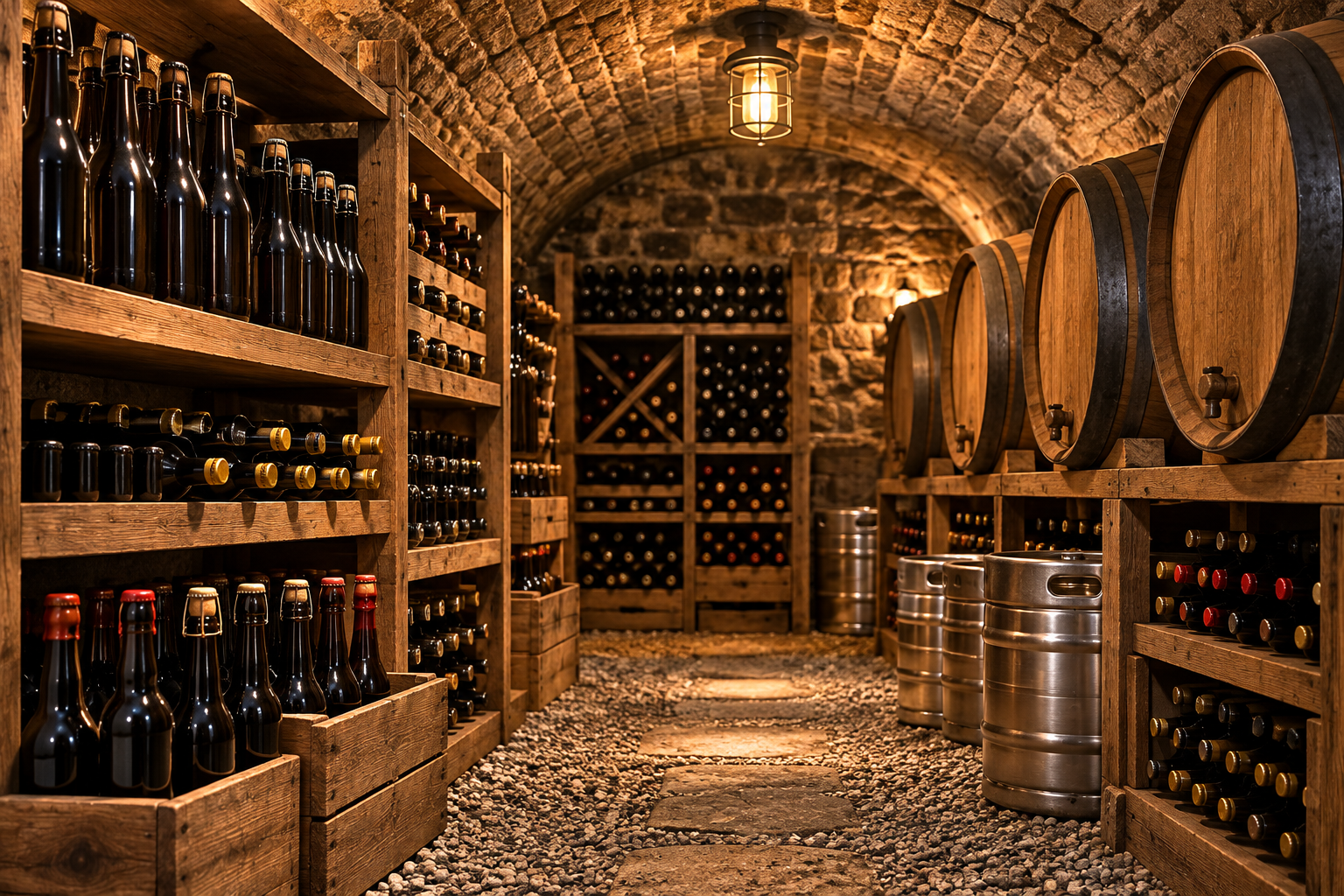
You do not need an elaborate cellar. A cool basement or interior storage space may work, and an inexpensive thermometer can help you assess the conditions. A closed cardboard box protects bottles from light, but it will not keep them cool in a warm room.
A basement around 60°F may be workable for shorter storage, though changes will generally occur faster than at cooler temperatures. Avoid hot garages, attics, and locations near heating equipment.
Choose the coolest practical location that stays reasonably stable. If your available storage is unusually hot, refrigeration may be the better choice, even though it slows maturation.
For bottle-conditioned homebrew, allow carbonation to finish under conditions appropriate for the yeast before moving bottles into cooler storage.
Enjoy This Batch and Learn for the Next One
If you have brewed a beer you really like and intend to make again, set aside a few bottles if it fits the criteria for cellaring. Enjoy the rest while you explore what time might offer.
Record the packaging date and take notes when the beer has completed initial conditioning. Compare additional bottles at three, six, nine, and twelve months after packaging. If you can spare them, reserve two bottles for each tasting so you are less dependent on the condition of a single bottle.
Record changes in aroma, perceived sweetness, bitterness, roast, spice intensity, and overall balance. Serve samples at similar temperatures, and note the storage conditions so you can reproduce them with a future batch.
You might like the beer at one month, love it at six months, and find it less appealing at twelve. Perhaps the roasted flavors become less dominant before the beer eventually loses some of its richness. Perhaps appealing dried-fruit notes develop, then later give way to flavors you enjoy less.
Those observations help you plan the next batch. If six months is your preferred drinking window, you can brew further ahead of an occasion or reserve more bottles to reach that age. If you prefer it young, you have learned that too, without committing the entire batch to extended storage.
Enjoy the beer you have made, save a few bottles, and let the results help you decide when to enjoy the next one.