
Can Old Brewing Equipment Ruin a Batch?
Posted by Matteo Lahm on 14th Aug 2026
Do Not Discover This on Fermentation Day
You would be surprised how many panicked emails we receive from beer and winemakers who discover an equipment problem after the batch is already underway.
Their fermenter is leaking. The stopper does not fit. The airlock is cracked. The tubing smells strange. Their hydrometer reading makes no sense. Others discover unusual mold, an unexpected film, or some other evidence that an infection may already be developing. Sometimes the juice, wort, or wine is sitting exposed while they try to determine what went wrong and what they should do next.
At that point, there may not be an easy answer. Beer and winemaking involve ingredients that begin changing as soon as you start working with them. You cannot always pause the process for several days while you replace a missing part or determine whether a questionable fermenter is safe to use.
What makes these situations especially frustrating is that most of them could have been avoided. The problem existed before the batch began. It simply was not discovered until the ingredients, money, and time were already at risk.
Some equipment failures are obvious, but many are not. A fermenter can look clean while scratches shelter residue and microorganisms. Tubing can appear usable while retaining odors from an earlier batch. A seal may look intact but leak slowly once the fermenter is full. A hydrometer may float normally while giving you an inaccurate reading.
These are small problems until they threaten an entire batch.
Ingredients cost money. Whether you are working with fresh grapes, a premium wine kit, fruit, malt extract, or an all-grain beer recipe, you have made a real investment before fermentation even begins. Add the hours you spend preparing it and the weeks or months you will spend waiting for it, and the cost becomes considerably greater.
The last thing you need is to lose that investment because of a stupid problem that could have been caught before fermentation day.
Looking Clean Is Not the Same as Being Sanitary
Most beer and winemakers know how important sanitation is. The harder lesson is that equipment does not remain sanitary simply because you clean it after every use.
Plastic fermenters, tubing, siphons, bottle fillers, spigots, seals, and similar components wear out gradually. That is what makes the problem easy to miss. There may not be an obvious crack or dramatic failure. Instead, the plastic becomes slightly cloudy. A few scratches appear. The tubing gets a little stiffer. An odor remains after cleaning.
None of these changes may seem serious on its own, but they can indicate that the equipment is becoming harder to clean and sanitize properly.
Scratches in plastic are particularly concerning. Organic residue and microorganisms can settle into them, where cleaners and sanitizers may not reach effectively. Scrubbing harder is not always the answer because aggressive scrubbing can create even more scratches.
Hold plastic fermenters and other equipment under a bright light. Examine the bottom, the sides, the area around the lid, and the opening for the spigot. Look at any place that may have been scraped by a spoon, brush, or cleaning tool.
Then smell it.
Clean equipment should not carry a persistent reminder of the beer, wine, fruit, or flavoring that was previously inside it. If an odor remains after proper cleaning, you have to assume that something remains with it.
Pay Attention to the Small Parts
A large fermenter naturally gets most of your attention, but the inexpensive parts are often where preventable problems begin.
Flex your tubing and inspect the entire length. Look for stiffness, cloudiness, staining, small cracks, or buildup inside. Tubing is inexpensive compared with the ingredients that pass through it. There is no good reason to risk an entire batch because you wanted to get one more use from a questionable piece.
Check every stopper, gasket, and seal. Rubber and silicone parts can harden, shrink, split, or gradually lose their ability to seal. The damage may be difficult to see until the part is under pressure or surrounded by liquid.
Inspect your airlocks for hairline cracks. Confirm that your stoppers fit the fermenters you plan to use. If your fermenter has a spigot, fill it with water and let it sit long enough to reveal a slow leak. Operate the valve several times and make sure it can be disassembled for cleaning.
A few drops of water on the floor are an inconvenience. A slow leak from a fermenter full of wort, juice, or wine is a much more expensive discovery.
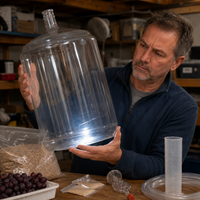
Glass equipment also requires close inspection. Look for chips, cracks, and stress marks, especially around the neck and bottom of a carboy. Damaged glass is not merely a risk to the batch. A full glass carboy is heavy enough to cause serious injury if it fails.
Make Sure Your Instruments Are Telling the Truth
Some of the most costly problems do not involve leaks or contamination. They involve measurements you trusted but should not have.
Examine your hydrometer for cracks and make sure the paper scale inside has not shifted. Test it in distilled water at its calibration temperature. It should read approximately 1.000. If it does not, determine the correction or replace it.
An inaccurate hydrometer can mislead you about starting gravity, alcohol potential, fermentation progress, and whether fermentation is complete. You may make several bad decisions without realizing that the original reading was wrong.
Check your thermometer against ice water or another reliable thermometer. Temperature errors can affect mashing, yeast rehydration, fermentation, and many other important steps.
If you use a pH meter, calibrate it before you need it. Inspect the probe and make sure your calibration solutions are still usable. A meter that turns on is not necessarily a meter that is giving you accurate information.
Test Everything with Water
Before starting the batch, assemble the equipment exactly as you intend to use it. Install the spigot, stopper, airlock, tubing, and fittings. Fill the fermenter with water. Let it sit. Run the siphon. Open the valve. Watch every connection.
This simple practice run can reveal leaks, poor seals, mismatched components, blocked tubing, and missing parts while the only thing at risk is water.
You may inspect everything and find no problems. That is not wasted effort. It is confirmation that you can begin with confidence.
You may also uncover a small crack, an unpleasant odor, a bad seal, or an inaccurate instrument. It might feel like a minor nuisance at the time, but it could be the problem that saves your batch.
Ingredients are too expensive, and your time is too valuable, to let something small and avoidable ruin both. Do not discover it on fermentation day.