
How All-Grain Brewing Lets You Control Sugar and Beer Body
Posted by Matteo Lahm on 29th Jan 2026
A Hands-On Guide to Sugar Control Through Three All-Grain Beer Kits
Most brewers start by focusing on what goes into their beer. Ingredients matter, but as you gain experience, you begin to realize that how those ingredients are handled matters just as much. You can brew two beers with the same ingredients and end up with completely different results depending on process alone. This is where all-grain brewing changes how you think. All-grain brewing gives you control over how sugar is created, not just how much of it ends up in your beer. That control is the freedom extract brewing does not give you.
This article is meant to teach you that difference clearly. If you brew with malt extract and have ever wondered whether all-grain brewing is worth trying, this is for you. Rather than treating all-grain as a jump in difficulty, you can think of it as an expansion of understanding. To make that concrete, you are going to look at three carefully selected all-grain beer kits that live at different mash temperature ranges. Together, they teach you how mash temperature shapes sugar profile, body, and finish, and why experienced brewers think about sugar very differently than beginners.
By brewing a crisp blonde ale, a balanced amber ale, and a fuller stout, you can experience the full range of sugar behavior that all-grain brewing makes possible. You are not doing this to memorize temperatures or chase efficiency. You are doing it to taste cause and effect. This is how you build confidence and start thinking like an experienced brewer.
When you brew with malt extract, the sugar profile of your beer is already fixed before you begin. The grain was mashed at a specific temperature, converted with a predetermined enzyme balance, and concentrated into a consistent product. That consistency makes extract brewing approachable and reliable. It also means that decisions about fermentability, body, and texture have already been made for you. When you brew all-grain, you take those decisions back.
To understand why that matters, you need to understand what happens to barley during the mash.
Barley malt contains starch and enzymes. The starch is the raw material. The enzymes determine what kind of sugar you create. Two enzymes do most of the work in a mash: beta amylase and alpha amylase. They do not behave the same way, and they do not prefer the same temperatures.
Beta amylase works best at lower mash temperatures. It breaks starch into small, highly fermentable sugars that yeast can consume easily and almost completely. Alpha amylase works best at higher mash temperatures. It produces a wider range of sugar sizes, including longer-chain sugars and dextrins that yeast cannot fully ferment. Those sugars remain in the finished beer and contribute body and mouthfeel.
Mash temperature determines which enzyme dominates. That is why mash temperature is the most important tool you have for shaping sugar profile in all-grain brewing.
When you mash at lower temperatures, roughly 145 to 149 degrees Fahrenheit, beta amylase dominates. The wort you create is highly fermentable. Yeast consumes most of the sugar, leaving little behind. Beers mashed in this range finish dry, feel light on the palate, and drink crisp and clean.
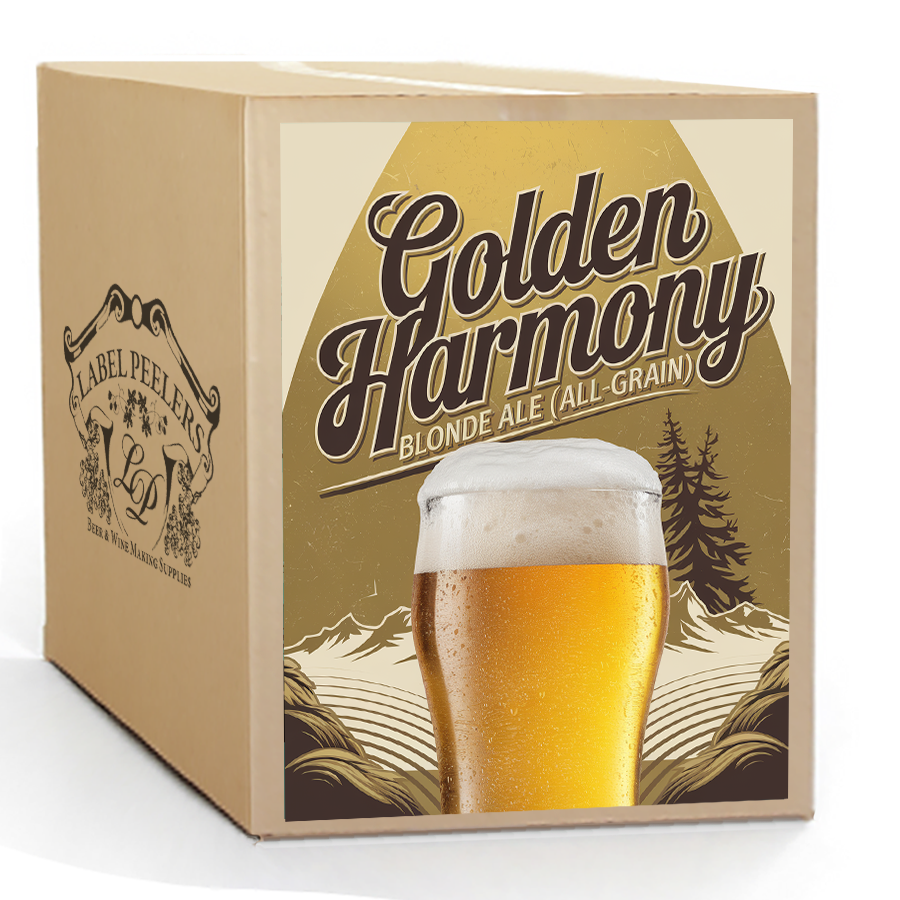 This is where a beer like the Golden Harmony Blonde Ale becomes such a powerful teaching tool. It uses a straightforward barley-based grain bill with very little to distract from the mash itself. When you mash this beer on the cooler end of the range, you can taste exactly what highly fermentable sugar does. The finish is dry, the body is restrained, and the beer feels crisp without needing to be low in gravity. If you are coming from extract brewing, this beer teaches you a critical lesson: dryness is not created by using less sugar. It is created by making sugar that yeast can fully ferment.
When you move into the middle mash temperature range, roughly 150 to 154 degrees Fahrenheit, both beta and alpha amylase are active. You create a mix of fermentable sugars and longer-chain sugars. Yeast consumes much of the wort, but not all of it. The result is balance.
Beers mashed in this range have moderate body, smooth mouthfeel, and a finish that feels complete rather than sharp or heavy. This is the range many experienced brewers work in when they want structure without extremes.
 The Sunset Amber Ale is designed to live right in this middle range, which makes it an ideal learning beer. Amber ales depend on balance. They should not finish thin, but they should not feel sweet or heavy either. When you brew this beer, small changes in mash temperature are easy to taste. Mash a few degrees cooler and the beer leans drier and cleaner. Mash a few degrees warmer and it becomes rounder and fuller. The recipe does not change. Your sugar profile does. This is often the moment when all-grain brewing truly clicks for extract brewers.
At higher mash temperatures, roughly 155 to 158 degrees Fahrenheit and above, alpha amylase dominates. You create a wort with a higher proportion of complex sugars and dextrins that yeast cannot fully ferment. Those sugars stay in the finished beer and create body, softness, and texture.
Beers mashed in this range feel fuller and more substantial. Importantly, that fullness does not require sweetness. You can finish with a relatively low gravity and still have a beer that feels rich and satisfying if the sugar profile supports it.
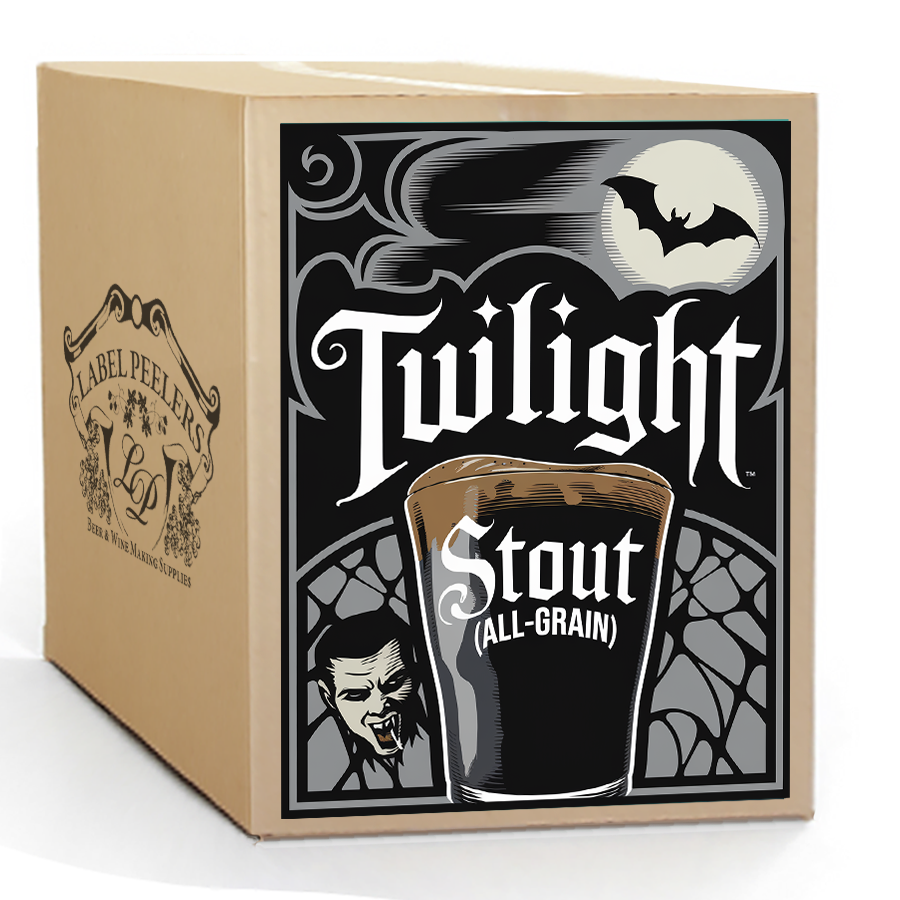 A stout like the Twilight Stout is built to demonstrate this clearly. Stouts rely on body and mouthfeel as much as flavor. When you mash warm, the barley malt produces a sugar profile that supports fullness and richness without relying on high alcohol or residual sweetness. The beer feels complete because the structure is there.
When you brew all three of these beers, you are not just making different styles. You are running an experiment. The grain is the same. The process is the same. What changes is mash temperature. By brewing a blonde ale at the low end of the range, an amber ale in the middle, and a stout at the high end, you experience how fermentability, body, and finish change even when gravity does not.
This is how experienced brewers think about sugar. You stop thinking only about how much sugar you have and start thinking about how that sugar behaves. You design beers around texture and balance first, then let alcohol content follow naturally.
If you want to experience this for yourself, you can purchase all three of these all-grain beer kits together and brew them as a learning series. Use coupon code TEACHALLGRAIN at checkout to save an extra 10 percent when you buy all three kits in one order. If you will be picking up your oreder from our store use code TEACHALLGRAINSP to cancel shipping charges. Copy and paste the code into the coupon field at checkout. This coupon code will remain active for anyone who finds this article on the web.
All-grain brewing does not replace extract brewing. It builds on it. Once you understand how sugar behaves, the fear fades, the process makes sense, and all-grain brewing becomes a logical next step rather than an intimidating one.