
How to Oak Age Beer Without a Barrel: A Guide to Oak Chips and Cubes
Posted by Dale Hynes on 20th Nov 2026
One of the first true craft beers I ever tried was Arrogant Bastard Ale, and it quickly became one of my favorites. It was bold, complex, and unlike anything I'd been drinking. Then I discovered OAKED Arrogant Bastard, and it blew me away. Somehow, they'd taken an already complex beer and made it even more interesting. Unfortunately, it was considerably more expensive and wasn't always easy to find.
 That got me thinking. Why couldn't I make something similar myself? We already had an in house Arrogant Bastard inspired beer kit, so I decided to experiment with adding oak. The results exceeded my expectations. It turned into a beer so good that I actually had to hide it from my roommates to keep them from drinking it all!
Getting Barrel Aged Flavor Without the Barrel
Traditional oak barrels can produce exceptional beers, but they're not always practical for homebrewers. They're expensive, take up considerable space, and require maintenance to remain usable. Empty barrels can dry out and leak, while improper storage can encourage unwanted microorganisms. Even smaller barrels present challenges because their greater wood to beer surface area can extract flavors surprisingly quickly.
Oak chips and cubes offer a much simpler alternative. They're affordable, easy to store, and allow you to experiment with different wood varieties and toast levels using equipment you probably already own. While they can't completely reproduce the gradual oxygen exposure and other characteristics of traditional barrel aging, they can deliver many of the flavors that make barrel aged beers so appealing.
 Choosing Oak for Your Beer
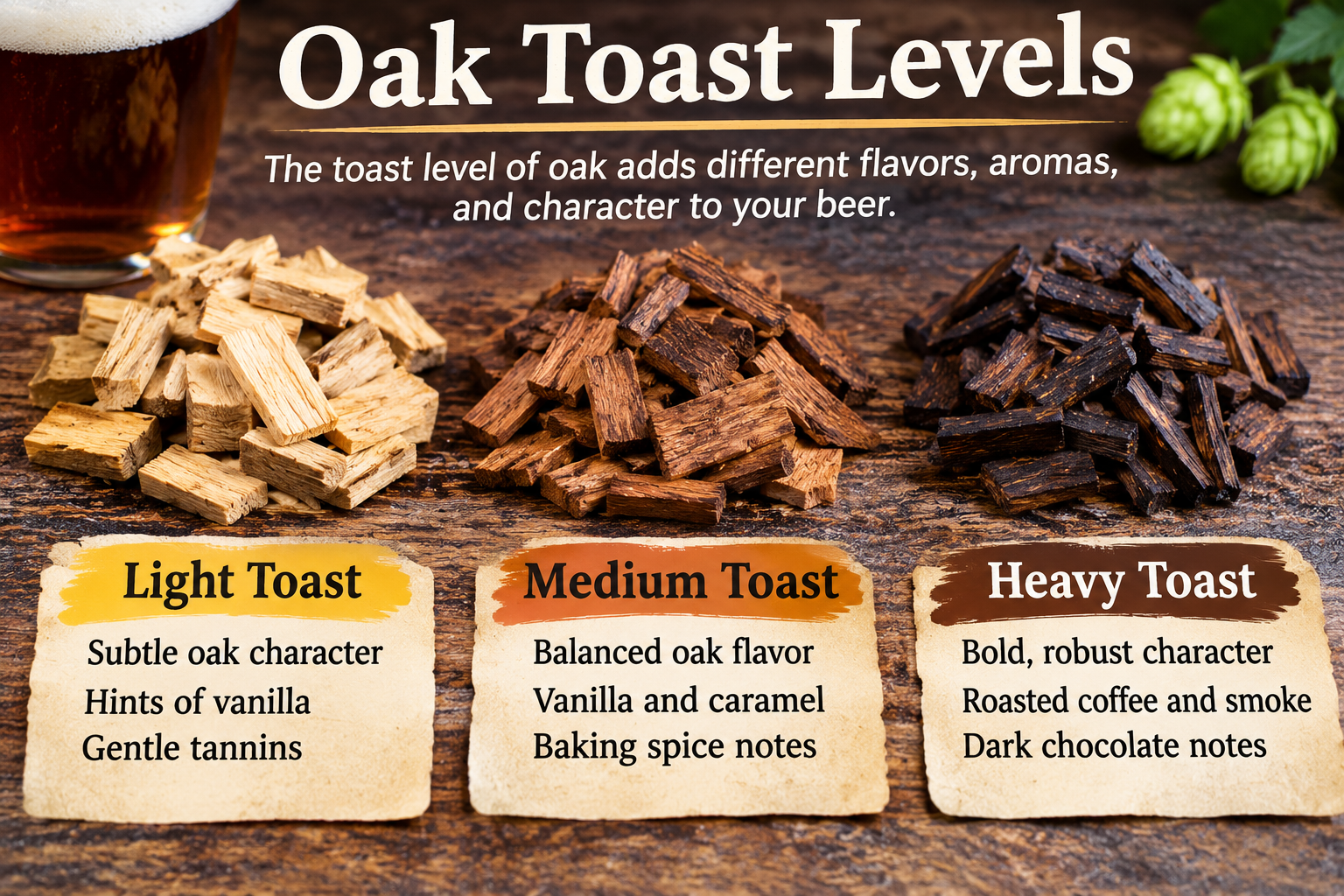
Like hops, different oak varieties contribute distinct flavors. American oak typically brings vanilla, coconut, and sweet woody notes, while French oak offers subtler spice and tannins. Hungarian oak often provides a balance of both. Toast level further influences flavor, ranging from natural wood and tannins with light toast to vanilla and caramel with medium toast and darker, roasted notes with heavy toast.
***Always use oak specifically prepared for brewing beer or making wine. Woodworking scraps and barbecue smoking chips may contain unwanted substances or produce unpredictable flavors.
Chips extract flavor relatively quickly because of their greater exposed surface area, while cubes release their characteristics more gradually. For a five gallon batch, start with approximately 1/2 to 1 ounce of chips or 1 to 2 ounces of cubes. Begin tasting after several days with chips or a few weeks with cubes, adjusting contact time to suit your preferences. Remember, you can always add more oak character, but removing too much isn't nearly as easy.
Which Beers Work Best with Oak?
Oak tends to complement beers with enough flavor and body to support its presence. Imperial stouts, robust porters, barleywines, and old ales are excellent candidates because vanilla, toasted wood, and spice work naturally alongside roasted malt, chocolate, caramel, and alcohol warmth.
Belgian dark strong ales and certain saisons can also develop interesting complexity with oak. Even amber ales and wheat beers can benefit from restrained additions, although lighter styles require a gentler approach. Ultimately, oak is another ingredient to experiment with, not something reserved exclusively for strong or dark beers.
 Adding Oak and Letting the Beer Mature
Oak is commonly added after primary fermentation, during what's often called secondary fermentation. Technically, this is usually conditioning rather than additional fermentation. Adding oak directly to the primary fermenter after fermentation finishes can eliminate an unnecessary transfer and reduce oxygen exposure.
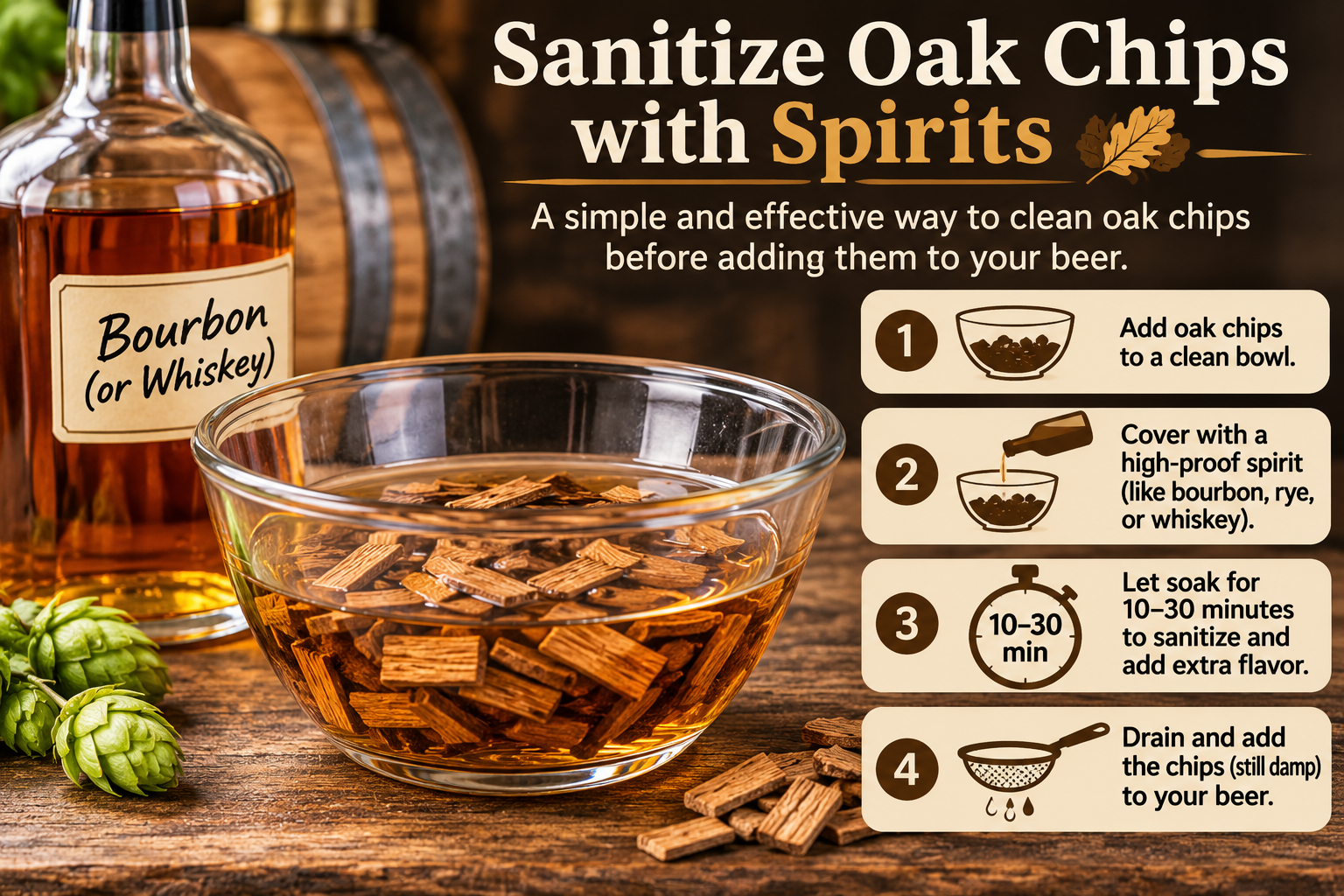
I soak my chips or cubes in just enough whiskey or bourbon to cover them for about 24 hours. There's no need for expensive spirits. I simply choose something affordable that I'd enjoy drinking neat. The soak may reduce contamination risk, although it doesn't guarantee sanitation.
Afterward, I pour everything into the beer, oak and whiskey included, capturing the flavors from both. The additional alcohol increases ABV only slightly. For example, two ounces of 40% bourbon added to five gallons of 6% beer raises its strength by approximately 0.03 percentage points.
Taste periodically and remove the oak once the flavor reaches your preference.
Oak flavors continue evolving after bottling. Initially sharp woody notes may become better integrated with malt sweetness and alcohol warmth, particularly in stronger beers. However, aging doesn't guarantee improvement. Hop aromas can fade, and oxidation can introduce stale flavors. Always confirm fermentation is complete and gravity is stable before bottling to prevent excessive carbonation.
A Little Oak Goes a Long Way
One of the greatest advantages of oak chips and cubes is the freedom to experiment without a major investment. Try splitting a batch and treating only half with oak, then compare the results side by side. You might discover that American oak works beautifully with your favorite stout, while French oak adds just the right complexity to a Belgian ale.
My Arrogant Bastard experiment taught me that creating a memorable beer doesn't always require expensive equipment or complicated techniques. Sometimes, a little oak is all it takes to turn a beer you already love into something worth hiding from your roommates...Steve