
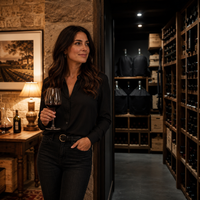
Your Wine Cellar Does Not Need to Be Perfect—but It Does Need to Be Dark
Posted by Matteo Lahm on 20th Jul 2026
Why Light May Be a Bigger Storage Threat Than Small Temperature Fluctuations
Home winemakers spend a lot of time worrying about temperature.
Is the basement too warm? Did the room climb a few degrees during the afternoon? Will a seasonal change ruin the wine? Should the thermometer stay fixed at one exact number from January through December?
Those are reasonable concerns. Temperature matters, especially when wine will be aging for months or years. But many winemakers become so focused on small fluctuations that they overlook something much easier to control.
Light.
A wine cellar does not have to be perfect. It does, however, need to be dark.
Small Temperature Changes Are Not Usually the Emergency
Cool, stable storage is ideal, but “stable” does not mean motionless.
A basement that gradually becomes warmer during the summer and cooler during the winter is not automatically a bad place to keep wine. Slow, moderate seasonal changes are usually less concerning than repeated swings between extremes.
Temperature still affects how quickly wine develops. Warmer conditions generally accelerate the chemical reactions involved in aging. A wine stored at a moderately warm temperature may soften and mature sooner than the same wine stored under cooler conditions.
That does not necessarily mean it has been ruined. It means its aging schedule may be moving faster.
The real concern begins when wine remains too warm for too long or is repeatedly exposed to severe temperature changes. Prolonged heat can flatten fruit, accelerate oxidation, reduce freshness, and push a wine toward maturity before you intended.
But a small, gradual change on the thermometer is not the same thing as heat damage.
Light Creates a Different Kind of Risk
Light exposure does not simply make wine age faster. It can trigger chemical reactions that alter the wine’s aroma and flavor.
This is especially important with white, rosé, and sparkling wines, which are generally more vulnerable to what is often called light-struck character. The resulting aromas can be surprisingly unpleasant, sometimes resembling cabbage, onion, garlic, rubber, or other sulfurous smells.
Delicate floral and fruit aromas may also be diminished.
Red wine is often somewhat better protected because of its higher concentration of color and phenolic compounds. It is also usually bottled in darker glass. But that does not make red wine immune, and it certainly does not mean a clear carboy full of red wine belongs beside a sunny window.
All wine benefits from darkness.
Clear Carboys Are the Blind Spot
Commercial wine is often protected by dark bottles, cardboard cases, warehouses, and cellar storage. Home wine may spend months in a transparent glass carboy placed in a spare room, workshop, kitchen, or basement.
That carboy may be protected from oxygen and contamination while remaining fully exposed to sunlight or bright indoor lighting.
This is one of the most overlooked storage risks in home winemaking.
Clear glass lets you admire the wine, monitor sediment, and watch the clearing process. It also allows light to reach the wine directly. A fermenter does not have to sit in full sunlight all day for exposure to become unnecessary. Even a bright room can provide more light than aging wine needs.
The solution is simple. Move the carboy to a darker location or cover it with an opaque fabric, fitted carboy cover, box, or other breathable barrier. Keep the airlock visible and accessible, but shield the wine itself.
You do not need expensive equipment. You just need to stop treating a clear carboy like decoration.
Bottle Color Matters
Dark glass offers more protection than clear glass, which is why so many wines intended for aging are bottled in green or amber bottles.
Clear bottles can be attractive, especially for pale wines, rosés, and fruit wines. They show off the color beautifully. But they also place more responsibility on the storage environment.
If you use clear bottles, store them in closed cases, cabinets, boxes, or a dark cellar. Do not leave them on open shelves near windows simply because they look good there.
Wine bottles are not houseplants. They do not benefit from sunlight.
Worry About the Right Things
The goal of wine storage is not to create a laboratory where the temperature never moves and every bottle lives under perfect conditions.
The goal is to avoid the conditions wine handles poorly.
That means protecting it from prolonged heat, dramatic temperature cycling, oxygen exposure, unreliable closures, and light.
Of those risks, light may be one of the easiest to eliminate. You may not be able to control every degree in your basement, especially during summer. You can control whether sunlight reaches the carboy.
So watch the temperature, but keep it in perspective. A slow seasonal change may simply cause the wine to age a little faster. Leaving it exposed to bright light serves no useful purpose at all.
Your cellar does not need to be perfect.
It just needs to be dark enough for the wine to rest.