
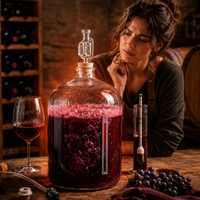
Can You Fix a Wine That Fermented Too Hot?
Posted by Matteo Lahm on 17th May 2026
Every winemaker eventually has a fermentation that gets away from them. Maybe the room warmed up during the day. Maybe the yeast took off faster than expected. Maybe the fermenter was larger than usual and held more heat than you realized. At first, everything may have seemed fine. The wine was bubbling, the yeast was active, and the fermentation looked healthy.
Then you tasted it.
Instead of fruit, softness, and balance, the wine seemed harsh. It may have had a burning finish, a rough alcohol edge, or even a slight solvent-like aroma. This is one of the classic signs of a fermentation that ran too hot. The important question is: can you fix it?
The honest answer is: sometimes, but not always.
When wine ferments too hot, the problem is not just that fermentation happened quickly. A fast fermentation can still produce a good wine if the temperature remains appropriate for the style. The bigger issue is that high fermentation temperatures can change the chemistry of the wine. Yeast does not simply turn sugar into alcohol and carbon dioxide. It also produces aroma compounds, flavor compounds, and different types of alcohols along the way.
One of the biggest concerns is fusel alcohol. Fusel alcohols are heavier alcohols that can be produced in greater amounts when fermentation temperatures climb too high. In small amounts, they can add weight and complexity. In larger amounts, they can make a wine taste hot, harsh, aggressive, or solvent-like. This is why two wines with the same alcohol percentage can feel completely different. One may taste smooth and balanced, while another seems to burn on the way down.
If your wine fermented too hot, the first step is to figure out how serious the problem is. Do not judge it too early. A wine that has just finished fermentation is rarely at its best. Young wine can taste rough even when nothing is seriously wrong. Carbon dioxide, suspended yeast, sharp acidity, raw tannin, and unfinished integration can all make a new wine seem harsher than it will be later.
So before you panic, give the wine some time. Rack it off the gross lees when appropriate, protect it from oxygen, maintain proper sulfite levels, and let it settle. After a few weeks or months, taste it again. If the harshness has softened and the fruit is beginning to show, the wine may simply have needed time.
If the wine still tastes hot after some aging, begin diagnosing the cause. Is the heat mostly a warming sensation from alcohol? Is it a sharp bite from acidity? Is it roughness from tannin? Or is it a harsh, solvent-like character that seems to dominate the aroma and finish? This matters because each problem has a different possible solution.
If the wine is simply high in ethanol, balance may help. A dry wine with high alcohol can taste hotter if it lacks body, fruit, tannin, or sweetness. In that case, the goal is not to remove alcohol. The goal is to make the wine feel more complete. Blending with a lower-alcohol wine can reduce the overall alcohol percentage and soften the impression. This is one of the most practical fixes if you have another compatible wine available.
Backsweetening can also help in certain wines. A small amount of sweetness can soften the perception of alcohol and acidity, especially in fruit wines, whites, rosés, and some lighter reds. This does not mean turning the wine into a dessert wine. Sometimes a very small adjustment is enough to make the wine seem rounder. However, backsweetening must be done carefully. The wine should be stabilized first so fermentation does not restart in the bottle.
If the problem is acidity, the solution may be different. High acid can make a wine seem sharp or hot even when the alcohol is not the real issue. Depending on the wine, you may be able to balance acidity with sweetness, blend with a lower-acid wine, or use acid-reduction methods. But you should be careful not to overcorrect. Acidity is important to freshness, and a flat wine is not an improvement.
If tannin is the issue, time is often your friend. Young reds can seem hard, bitter, or drying. That roughness may be mistaken for heat. Aging allows tannins to soften and integrate. Fining may also be an option if tannin is excessive, but it should be approached cautiously because it can strip desirable flavor and structure along with the harshness.
Fusel alcohol is the most difficult case. If the wine has a strong fusel character from a hot fermentation, there is no simple additive that removes it. Aging may soften the edges, but it usually cannot erase the problem completely. Blending may dilute the harshness, especially if the fusel character is noticeable but not overwhelming. Oak may add body and flavor that helps cover some of the roughness, but it will not truly fix the underlying issue. In some cases, the best use for the wine may be blending rather than bottling it on its own.
This is where expectations matter. A mildly hot wine may become acceptable or even enjoyable with time and careful blending. A severely hot, solvent-like wine may never become a great wine. It is better to be honest about that than to keep adding things and hoping for a miracle. Too many corrections can make the wine taste even more confused.
The best fix for a hot fermentation is prevention in the next batch. Remember that must temperature is not always the same as room temperature. Fermentation creates heat, especially during the most active stage. A room that feels comfortable may still allow the wine itself to climb above the range you intended.
Use a thermometer on the must, not just the room. Keep fermenters out of warm areas. Use water baths, frozen bottles, cooling jackets, fermentation chambers, or cooler rooms when needed. For delicate whites, rosés, and lighter reds, cooler fermentation helps preserve fruit and aromatics. For big reds, warmer fermentation may be appropriate, but it should still be intentional and controlled.
If a wine fermented too hot, do not dump it immediately. Let it settle, taste carefully, and decide whether the problem is alcohol, acid, tannin, youth, or fusel alcohol. Some wines can be improved with time, blending, backsweetening, or better balance. Others can only be made less flawed.
Either way, the batch can teach you something valuable. A hot fermentation is disappointing, but it also makes one lesson unforgettable: fermentation temperature does not just affect how fast yeast works. It affects what kind of wine you make.