Pale Wine, Heavy Punch
Posted by Matteo Lahm on 8th Jul 2026
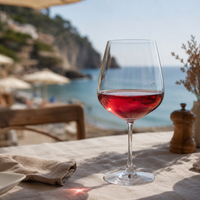
By the looks of the wine in this picture, you could be forgiven for thinking it was a light rosé.
Guess again.
I am at the beach in Italy with my family, technically on vacation, though I apparently never stop working. I opened a bottle of Nebbiolo Langhe, poured it into the glass, and immediately noticed how pale it looked. Not weak. Not watery. Just much lighter than many people expect from a red wine with real structure.
Then I tasted it.
That is when the article started writing itself in my head.
The wine was 13.5% ABV, so I was not expecting anything huge or overblown. But it had punch. Real punch. Tannin, acidity, grip, red fruit, floral notes, and that unmistakable Nebbiolo tension that makes the grape so compelling.
I knew Nebbiolo could do this. That was not the surprise. The surprise was how dramatic the contrast was between what I saw and what I tasted. In the glass, it looked almost delicate. On the palate, it had authority. It had backbone. It had presence.
That is why I wanted to talk about it.
This was not Barolo. It was not Barbaresco. It was Langhe Nebbiolo, which is usually the more approachable side of Nebbiolo. It is generally made to be enjoyed younger, with less need for years in the cellar. Compared with the great heavyweight Nebbiolo wines of Piedmont, Langhe Nebbiolo is supposed to be the friendly one. The easier one. The one that introduces you to the family without making you sit through the entire family history.
And yet, even this wine had plenty of structure.
That is the teachable moment. If a relatively approachable 13.5% Langhe Nebbiolo can look that light and still feel that big, then color is clearly not telling the whole story.
You should not judge a book by its cover, and you definitely should not judge a wine by its color.
It is an easy mistake to make. We are visual creatures. A dark red wine looks rich, powerful, and serious. A pale red wine looks delicate, soft, and simple. Before we ever smell or taste the wine, our eyes start making promises the wine never agreed to keep.
Sometimes those assumptions are fair. A deep Cabernet Sauvignon, Syrah, Petite Sirah, or Malbec may very well be full-bodied, concentrated, and intense. Thick-skinned grapes, warm climates, ripe fruit, and longer extraction can all contribute to darker color and bigger structure.
But color and body are not the same thing.
Color mostly comes from pigments in the grape skins. Body comes from a broader combination of alcohol, tannin, acidity, glycerol, extract, residual sugar, grape variety, ripeness, fermentation choices, and aging. These things can overlap, but one does not guarantee the other.
Nebbiolo may be the best example. It often makes wines that are surprisingly light in color, especially compared with Cabernet Sauvignon, Syrah, or Malbec. Even young Nebbiolo can look more ruby, garnet, or brick-toned than deep purple. With some age, it can move toward orange and tawny edges faster than many other red wines.
But on the palate, Nebbiolo can be a heavyweight.
The grape is famous for high tannin and high acidity. That means a Nebbiolo can look almost gentle in the glass and then come across firm, dry, intense, and deeply structured when you taste it. If a Langhe Nebbiolo can deliver that kind of grip, a serious Barolo or Barbaresco takes the idea even further. Those wines can look elegant, even restrained in color, while carrying the kind of structure, depth, and persistence that puts them firmly in heavyweight territory.
That is the great contradiction of Nebbiolo. It may not look muscular, but it fights well above its visual weight class.
Sangiovese can play a similar trick. Many Chianti Classico, Brunello di Montalcino, and Vino Nobile wines are not especially dark in the modern, opaque sense. They are often medium ruby, sometimes fairly transparent at the rim. But good Sangiovese can have vivid acidity, firm tannin, dried cherry, herbs, tobacco, leather, earth, and a long savory finish. It may not feel big in a plush, jammy way, but it can have tremendous structure and presence.
Pinot Noir breaks the mold differently. It is usually lighter in color and lower in tannin than Nebbiolo, but serious Pinot Noir can still have real depth. It may not hit you with obvious weight, but it can carry layers of cherry, spice, earth, mushroom, forest floor, and mineral tension. Pinot Noir reminds us that intensity and heaviness are not the same thing.
Northern Rhône Syrah is another great example, especially because some of the most famous wines from the region may include a small amount of white grapes, such as Viognier, depending on the appellation and producer. That sounds like it should make the wine lighter, and visually it may not always look as black and dense as a modern warm-climate Syrah or Petite Sirah. But a serious Côte-Rôtie or Hermitage can be an absolute monster in the glass: savory, peppery, tannic, smoky, meaty, and built with tremendous structure.
Again, the color does not tell the whole story.
The reverse is also true. Some darker wines are not nearly as massive as they look.
Merlot can have impressive color, especially from warmer regions, but it is often more smooth and round than forceful. A dark Merlot may look powerful, but the drinking experience can be plush, soft, and generous rather than firm or aggressive.
Malbec can be misleading too. Many Malbecs are deeply colored, sometimes almost inky, but not all of them are enormous in body. Some are juicy, fruit-forward, and easygoing, with soft tannins and a friendly finish. The color may suggest something brooding and intense, but the wine itself may be more relaxed than expected.
Even Zinfandel can fool you. It can have deep color and high alcohol, but many Zinfandels feel more jammy and sweet-fruited than structurally heavy. They may be bold in flavor without having the same firm backbone as a lighter-colored Nebbiolo, Sangiovese, Pinot Noir, or Northern Rhône Syrah.
That is why color should be treated as a clue, not a verdict.
For home winemakers, this matters. It is easy to equate a successful red wine with deep, dark color. There is nothing wrong with wanting rich color in styles where that is part of the expectation. If you are making Cabernet Sauvignon, Syrah, Petite Sirah, Malbec, or another deeply colored red, color can be part of the pleasure.
But do not make the mistake of conflating dark color with body.
If you are making a wine in the general profile of Nebbiolo, Sangiovese, Pinot Noir, Grenache, Tempranillo, or Northern Rhône-style Syrah, do not panic just because the wine is not black-purple in the glass. Some of the world’s most serious wines are not built that way. They are built on tannin, acidity, balance, length, savory complexity, and the way the wine carries itself after you swallow.
A wine does not need to be opaque to be serious. It does not need to stain the glass to have structure. It does not have to be dark to kick you in the teeth on the first sip.
Some wines show their power visually. Others save it for the palate.
That pale glass of Langhe Nebbiolo was a perfect reminder. It did not announce itself with dark, dramatic color. It did not look like a wine trying to impress anyone.
Then I tasted it, and there it was: grip, brightness, structure, and character.
And remember, this was the approachable version.
If a 13.5% Langhe Nebbiolo can make that point so clearly, imagine what happens when Nebbiolo shows up as Barolo or Barbaresco. At that point, you are not just dealing with a pale wine that has a little surprise behind it. You are dealing with one of the great structural red wines of the world.
That is why the moment stuck with me. It was not just a good glass of wine. It was a reminder worth sharing.
The wine had plenty to say. It just did not feel the need to say it with color first.