
The Cold Break Explained: Clearer Beer Starts Before Fermentation
Posted by Matteo Lahm on 12th Jun 2026
Beer makers should take wort chilling seriously. It is easy to think of chilling as a practical step that simply gets the wort cool enough for yeast, but that misses what is really happening. Chilling is not just about temperature. It is one of the first major clarification steps in the brewing process.
Before fermentation ever begins, the brewer has a chance to remove material that can contribute to haze, rougher flavor, and weaker long-term stability. That chance comes during the cold break.
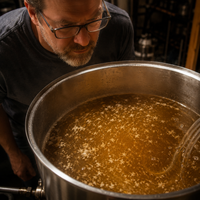
The cold break is one of those brewing processes many people have seen without knowing exactly what they were looking at. If you have ever chilled a kettle of wort and noticed cloudy flakes, pale clumps, or snow-globe-like particles forming as the temperature drops, you have seen the cold break in action. It may look like random sludge, but there is real brewing science behind it.
The cold break is not just debris. It is chemistry becoming visible.
During the boil, wort contains proteins, polyphenols, hop compounds, lipids, and other materials extracted from malt and hops. While the wort is hot, many of these compounds are dissolved or suspended. As the wort cools rapidly, their solubility changes. In simple terms, hot wort can hold certain things that cold wort cannot.
When the temperature drops, those compounds begin to bind together. Proteins and polyphenols form complexes. Small particles become larger particles. Fine haze-forming material clumps into visible flocs. Eventually, much of it settles into the trub layer at the bottom of the kettle or fermenter.
That is the cold break.
Clear beer does not begin with a finished beer. Clear beer begins with good wort handling.
Hot Break and Cold Break Are Not the Same Thing
To understand cold break, it helps to compare it with hot break.
Hot break happens during the boil. As wort reaches a rolling boil, heat denatures proteins. That means the proteins change shape. Once they unfold and lose their original structure, they can link together and coagulate. This is part of the foam and clumpy material brewers often see early in the boil.
Cold break happens later, during chilling. Instead of heat causing protein coagulation, the rapid drop in temperature causes certain compounds to become less soluble. They come out of solution and collect together. Hot break is driven by boiling. Cold break is driven by cooling.
Both are important. Together, they remove a portion of the material that could otherwise contribute to haze, instability, and rougher flavor development.
Think of it this way: the boil prepares the wort chemically, and the chill finishes the job physically.
Why Rapid Chilling Helps
The speed of chilling matters because the cold break forms best when wort is cooled quickly and decisively.
When wort cools slowly, some haze-forming material may remain finely suspended. It can be harder for those small particles to clump together and drop out cleanly. Rapid chilling encourages those compounds to crash out more efficiently. That is one reason brewers use immersion chillers, counterflow chillers, plate chillers, or ice baths instead of simply leaving hot wort to cool on its own.
Fast chilling also helps move the wort through the temperature range where certain unwanted risks are higher. Hot wort that sits too long can continue to develop dimethyl sulfide, commonly called DMS, especially in pale beers and lightly kilned malt styles. DMS can give beer a cooked corn or vegetal character. A good boil drives off DMS, but wort that cools too slowly can remain warm enough for precursors to continue converting while the steam is no longer carrying those compounds away as effectively.
That does not mean every batch chilled slowly is ruined. Beer is more forgiving than that. But from a process standpoint, chilling promptly is simply better practice. It improves cold break formation, helps protect flavor, and gets the wort to yeast-pitching temperature more efficiently.
What the Cold Break Does for Beer Clarity
Cold break material is closely tied to beer clarity because many of the compounds involved are the same types of compounds that contribute to haze.
Proteins and polyphenols are a major part of this discussion. Malt contributes proteins. Hops and malt both contribute polyphenols. In the right amounts, these compounds can help with body, foam, and flavor structure. But when too much haze-active protein and polyphenol material remains in the beer, it can lead to cloudiness, chill haze, and long-term instability.
Chill haze is especially frustrating because it often appears after the beer is refrigerated. A beer may look reasonably clear at room temperature, then turn cloudy once cold. This happens because some compounds stay dissolved when warm but become less soluble when chilled. That is related to the same basic principle behind the cold break.
A good cold break helps remove some of these compounds before fermentation. It is not the only factor in beer clarity, and it will not magically make every beer brilliant. Recipe design, malt choice, yeast strain, hopping rate, fermentation health, conditioning time, and packaging practices all matter. But cold break formation gives the beer a better starting point.
Clarity is much easier to achieve when the wort begins with less haze-forming material.
Does Cold Break Affect Flavor?
Yes, it can.
A poor cold break does not always create an obvious flavor flaw by itself, but it can contribute to a less refined beer. Excess trub and break material may carry lipids, hop matter, and protein complexes into the fermenter. In some cases, that can affect flavor stability over time. Beer may seem a little rougher, less clean, or more prone to stale character as it ages.
This is especially relevant for lighter beer styles where there is nowhere to hide. A stout or heavily hopped IPA may cover small process flaws with roast, bitterness, or hop aroma. A pale lager, cream ale, blonde ale, Kölsch-style beer, or simple golden ale will expose everything.
That said, brewers should not become obsessive about eliminating every particle of break material. Some cold break entering the fermenter is normal. In fact, a modest amount of trub can provide nutrients that yeast can use. The goal is not surgical purity. The goal is good separation and reasonable wort quality.
How to Encourage a Good Cold Break
The most important step is simple: chill the wort quickly.
For small batches, an ice bath can work, especially if the water is changed or supplemented with more ice as it warms. For larger batches, an immersion chiller is often the most practical upgrade. Counterflow and plate chillers can cool wort very efficiently, though they require more attention to cleaning and sanitation.
After chilling, give the wort a little time to settle. Some brewers whirlpool the wort by stirring it in a circular motion, then letting it rest. This can help gather trub into a cone or central pile, making it easier to transfer clearer wort.
When transferring, do not scrape the bottom of the kettle trying to recover every last ounce. That final bit of wort is often loaded with the very material you just worked to separate. Leaving a small amount behind can be a worthwhile tradeoff for cleaner wort.
Take This Step Seriously
The cold break is one of the best examples of how brewing rewards process, not just ingredients. You can buy excellent malt, choose the right hops, and pitch a good yeast strain, but the way you handle the wort still matters. If chilling is treated as an afterthought, the beer starts fermentation at a disadvantage.
When wort is chilled quickly, chemistry works in your favor. Haze-forming compounds lose solubility. Proteins and polyphenols bind together. Flocs form. Trub settles. The wort becomes better prepared for fermentation.
That is why the cold break deserves more attention than it usually gets. It is not just a visual curiosity in the kettle. It is an early clarification step, a flavor stability step, and a sign that your brewing process is moving in the right direction.
Clear beer does not start in the bottle, the keg, or the refrigerator.
It starts before fermentation, when hot wort becomes cool wort and the cold break begins to fall.