
Two Malts, One Color, Completely Different Beer
Posted by Matteo Lahm on 15th Apr 2026
It is easy to assume that grains with similar Lovibond ratings will behave similarly in your beer. After all, the number is precise. It suggests control. If two malts sit in the same color range, they should contribute roughly the same character, just with minor variation.
That assumption is one of the fastest ways to limit your growth as a brewer.
Lovibond tells you one thing, and one thing only. Color. It does not tell you how a grain was made, how it will taste, or how it will shape the structure of your beer. Once you start looking beyond that number, you begin to see that grains with nearly identical color can push your beer in completely different directions.
Start with a simple comparison.
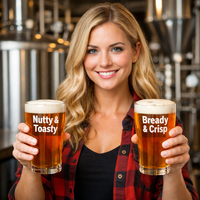
Victory Malt and Biscuit Malt both live in the mid 20s Lovibond range. In the glass, they will contribute a similar hue. But that is where the similarity ends.
Victory Malt leans warm and nutty. It brings to mind toasted nuts, pie crust, and a fuller, rounder impression on the palate. It adds depth and a gentle toasted richness that integrates smoothly into the body of the beer.
Biscuit Malt takes a different path. It is drier, sharper, and more structured. Think fresh bread crust or dry toast. It enhances crispness and reinforces a firm backbone without adding the same sense of roundness.
Same color. Different beer.
This is the first shift in thinking. You are not choosing grains for how they look. You are choosing them for what they do.
To understand what a grain will actually contribute, you need to look at how it was processed.
Kilned malts like Victory and Biscuit develop their character through controlled heating. They tend to produce dry, toasty, bready, or nutty flavors without contributing significant sweetness. Crystal malts, on the other hand, are stewed before kilning, locking in sugars that translate into caramel, toffee, and increased body in the finished beer. Roasted malts go even further, delivering coffee, cocoa, and bitter notes.
This is why two grains at the same Lovibond can behave so differently. The number reflects the end color, not the path taken to get there.
Once you understand that, the next layer becomes visible.
Even within the same category and color range, grains can express themselves differently. One toasted malt may lean nutty and round, while another leans dry and crisp. The difference often shows up in the flavor descriptors provided by the maltster. Words like toasted, graham, and nutty suggest warmth and fullness. Terms like cracker, bread crust, and dry point toward structure and a firmer finish.
These are not marketing phrases. They are functional clues.
Then there is a third layer that many brewers overlook entirely. The maltster.
Two companies can produce a malt with the same name and similar Lovibond, and still deliver noticeably different results. Briess and Swaen are a perfect example.
Briess malts are known for their consistency and clarity. Their toasted malts tend to present clean, well defined flavors that behave predictably from batch to batch. When you use a Briess product, you know what you are going to get, and you can rely on it.
Swaen, rooted in European malting tradition, often brings a slightly different expression. Their malts can feel a bit more layered, sometimes with deeper bread crust character or a subtle richness that builds across the palate. The difference is not extreme, but it is enough to shape the personality of the beer.
Part of this comes down to kilning approach. Small variations in temperature curves and timing can shift a malt from crisp and dry to warm and rounded. Barley variety plays a role as well. North American barley often leans clean and neutral, while European barley can contribute a touch more grain character and depth.
At this level, you are no longer just selecting an ingredient. You are choosing between interpretations of that ingredient.
This is where brewing begins to resemble cooking at a higher level. A chef does not just choose tomatoes. They choose a specific type, from a specific place, for a specific purpose. The same mindset applies here.
If you rely on Lovibond alone, you are brewing by appearance. When you start factoring in process, flavor descriptors, and maltster, you begin brewing with intention.
That is the difference between making good beer and making the exact beer you set out to create.